
Safe Ingredient Handling and Storage Practices in Modern Nutrition Research
Food safety errors contribute to millions of illnesses each year, and research environments face similar risks when ingredients and laboratory materials are stored improperly. Sterile liquids, powdered compounds, nutritional samples, and reconstitution materials can lose stability when exposed to contamination, temperature fluctuations, or poor handling practices. Research teams working in nutrition science, wellness testing, and laboratory analysis often rely on strict storage protocols to protect sample integrity and ensure accurate outcomes.
Common mistakes include leaving reconstituted materials at room temperature too long, using non-sterile tools during preparation, or storing sensitive liquids in unsuitable containers. Educational resources discussing how to store bac water and similar sterile solutions continue to highlight the importance of temperature control, contamination prevention, and expiration awareness in research and wellness settings. Proper handling procedures help reduce the risk of microbial growth while preserving the reliability of ingredients used in nutritional testing and preparation.
Why Storage Problems Continue to Affect Nutrition Research
Modern nutrition studies often involve highly sensitive compounds. Vitamins, amino acids, probiotics, peptides, and liquid supplements may degrade when exposed to heat, moisture, oxygen, or light. Small storage errors can affect the chemical composition of ingredients and lead to inconsistent findings.
The U.S. Food and Drug Administration (FDA) notes that contamination risks increase when sterile products are exposed to unclean handling conditions or improper storage environments. Research shows that repeated opening and closing of containers may introduce airborne microorganisms, especially when protective handling procedures are ignored.
Temperature instability remains one of the biggest challenges. Refrigerated materials that experience frequent warming and cooling cycles may lose potency faster than expected. Data published by The World Health Organization (WHO) also emphasizes that controlled storage conditions play a major role in preserving biological and pharmaceutical materials.
Nutrition laboratories are not the only environments affected. Home wellness enthusiasts, supplement researchers, and independent testing facilities often manage small quantities of reconstituted ingredients without access to industrial-grade storage systems. This increases the need for simple and reliable safety procedures.
Why Sterile Storage Conditions Matter
Sterility is essential because contamination can alter both safety and accuracy. Bacteria, mold, and environmental particles may enter storage containers during preparation or repeated handling. Even a small amount of contamination can compromise an entire batch.
The Centers for Disease Control and Prevention (CDC) explains that sterile preparation areas reduce the spread of harmful microorganisms and help maintain product integrity. Clean handling methods are especially important when working with liquids intended for mixing, dilution, or laboratory evaluation.
Improper storage may also create misleading research results. If a nutrient sample degrades due to poor refrigeration, researchers may incorrectly assume the ingredient itself is ineffective. Experts note that reliable scientific conclusions depend heavily on maintaining stable storage conditions throughout the testing process.
Light exposure presents another overlooked problem. Certain vitamins and compounds break down when exposed to direct sunlight or fluorescent lighting for long periods. Amber containers, opaque storage systems, and dark refrigeration spaces are often recommended for light-sensitive materials.
Step 1: Prepare a Clean Storage Environment
Safe ingredient handling starts before any material is opened. Surfaces should be cleaned and disinfected before preparation begins. Gloves, alcohol wipes, sterile syringes, and sanitized tools help reduce accidental contamination.
The National Institutes of Health (NIH) advises maintaining clean preparation spaces when handling sterile compounds and laboratory solutions. Research environments should also separate food items from scientific materials to reduce cross-contamination risks.
- Disinfect countertops before use
- Wash hands thoroughly before handling materials
- Use sterile equipment whenever possible
- Avoid touching container openings directly
- Keep storage areas dry and temperature controlled
Simple organizational habits can significantly improve product stability and cleanliness.
Step 2: Understand Temperature Requirements
Different ingredients require different storage temperatures. Some materials remain stable at room temperature before opening, while others require refrigeration immediately after preparation.
Research published by The United States Pharmacopeia (USP) shows that temperature fluctuations may accelerate chemical breakdown in sensitive compounds. Refrigeration typically slows bacterial growth and helps maintain stability for many sterile liquids and nutritional preparations.
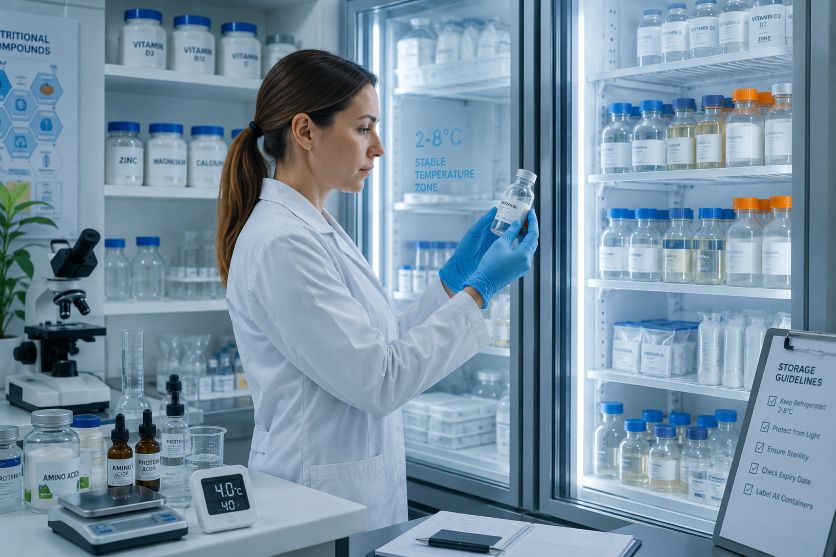
General refrigeration guidelines often recommend temperatures between 2°C and 8°C for temperature-sensitive materials. Freezing, however, may damage certain compounds and alter consistency. Reading manufacturer recommendations carefully is critical because storage requirements vary widely between products.
Storage areas should also avoid excessive humidity. Moisture buildup may affect powdered ingredients and increase contamination risks over time.
Step 3: Label and Monitor All Materials
Clear labeling reduces confusion and prevents expired materials from remaining in circulation. Every container should include preparation dates, expiration timelines, and handling instructions whenever possible.
Laboratory managers frequently use inventory tracking systems to monitor storage duration and refrigeration conditions. Smaller wellness facilities and independent researchers can apply similar principles using basic labels and storage logs.
- Write preparation dates clearly
- Record expiration information
- Track refrigeration requirements
- Separate opened and unopened materials
- Discard questionable or damaged products immediately
The Institute of Food Technologists (IFT) highlights that traceability improves both safety and consistency in research and food science operations. Organized monitoring systems also reduce waste by preventing unnecessary disposal of properly stored ingredients.
Step 4: Minimize Exposure During Use
Repeated exposure to open air increases contamination risks. Each time a container is opened, microorganisms from the surrounding environment may enter. Reducing unnecessary handling helps preserve sterility and product quality.
Experts often recommend preparing only the amount needed for immediate use. Smaller storage containers may also reduce repeated exposure compared to one large shared container.
Protective practices include:
- Opening containers only when necessary
- Using sterile transfer tools
- Closing lids immediately after use
- Avoiding direct contact with dispensing surfaces
- Keeping containers away from food preparation areas
The Occupational Safety and Health Administration (OSHA) stresses the importance of contamination control procedures in laboratory environments where sterile materials are handled regularly.
Step 5: Dispose of Materials Safely
Expired or contaminated products should never remain in active storage. Materials showing discoloration, unusual odor, cloudiness, or damaged packaging may no longer be safe for use.
Research facilities often follow regulated disposal procedures for sterile materials and laboratory waste. Smaller operations should still prioritize responsible disposal methods to avoid accidental misuse or contamination.
Expired items should be clearly separated from active inventory before disposal. Containers should also remain sealed during disposal whenever possible.
Long-Term Best Practices for Product Stability
Reliable storage systems depend on consistency rather than complicated equipment. Stable temperatures, clean handling routines, organized labeling, and contamination prevention remain the foundation of safe ingredient management.
Nutrition research continues to evolve alongside growing interest in wellness science, supplementation, and laboratory-based ingredient analysis. Safe handling practices are equally relevant outside laboratory settings, especially as consumers pay closer attention to food quality and preparation methods while traveling. Discussions surrounding healthy eating during travel and outdoor activities also highlight how temperature control, sanitation, and ingredient stability influence overall nutritional safety in real-world environments. As more facilities work with sensitive compounds and reconstituted materials, safe storage practices become increasingly important for maintaining quality and research accuracy.
The Food and Agriculture Organization of the United Nations (FAO) notes that proper handling standards support both public health and scientific reliability across food and nutrition systems. Clean environments and responsible storage methods help reduce waste while protecting the integrity of research materials.
Practical storage habits may seem simple, yet they play a major role in maintaining sterile conditions and preserving ingredient stability. Whether managing laboratory supplies, nutritional compounds, or sterile reconstitution liquids, careful handling remains one of the most effective ways to support safe and dependable research outcomes.


